The Move-Up Move · Charlotte

How to Price a Home Near One Million in Charlotte (2026)

How to price a home near one million in Charlotte: why $999K and $1.05M reach different buyers, what appraisals do at each tier, and what overpricing costs.
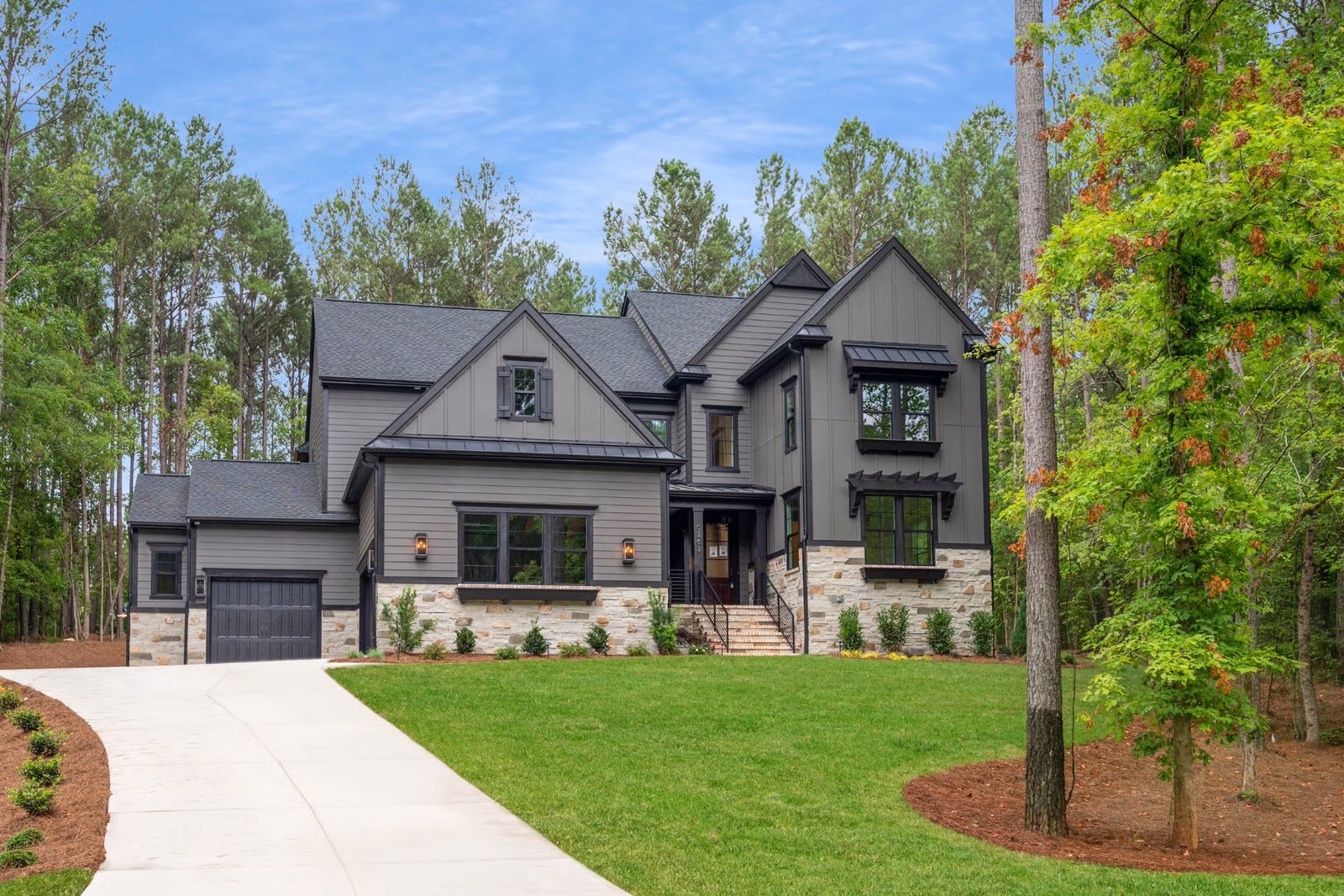
A charcoal-and-stone Carolina home at the end of a long white drive
The short answer

Listing a Charlotte home at $800K, $1M, or $1.2M is not one pricing problem at three sizes — each tier has its own buyer pool, its own pace, and its own failure mode. The mechanics that matter: buyers search in price bands, so a list price just above a round-number threshold can hide your home from its best audience; every price you set will eventually face an appraiser, and the gap between "what you hope" and "what the file supports" is where deals die; and as of mid-2026, homes take longer to sell as the price rises, because each step up thins the buyer pool. The through-line: overpricing costs more the higher you go — a stale listing at $1.2M burns more money, more leverage, and more time than the same mistake at $800K. Price is positioning, not aspiration.

Does pricing work differently at $800K, $1M and $1.2M?

If you own a Charlotte home worth somewhere between $800K and $1.2M, you're in the move-up band — the part of the market where most sellers are also buyers, timing is chained to another transaction, and a pricing mistake echoes through both deals. I'm going to walk through the psychology and mechanics tier by tier, because the advice that's true at $800K is incomplete at $1M and wrong at $1.2M.

First, the frame that governs everything below: your list price is not a statement of value. It's a marketing decision about which buyers see your home and what they think when they do. Value gets determined later — by offers, and then by an appraiser. The list price's only job is to put the largest possible number of qualified, motivated buyers in your rooms in the first two weeks. Everything in this post follows from that.

How do buyer search filters affect your list price?

Buyers don't browse the market; they filter it. Nearly every search a buyer or their agent runs uses price bands with round-number edges — up to $800K, $800K to $1M, $1M to $1.25M. Those edges create cliffs, and pricing without respecting them is the most common self-inflicted wound at these tiers.

Consider the seller convinced their home is worth "a little over a million," who lists at $1,050,000. Here's who sees it: buyers searching the $1M–$1.25M band — people whose budgets top out near $1.25M, who will walk through the home comparing it to houses listed at $1.2M and find it modest by comparison. Here's who doesn't see it: the deep pool of buyers capped at $1M, for whom this home would have been the best thing in their results. That seller didn't price the home $50K higher; they moved it into a different room where it competes worse, and hid it from the room where it would have won.

Now run it the other way. The same home at $999K appears at the very top of the under-$1M band — the strongest house those buyers see — and just below the psychological threshold where a million-dollar label makes a certain buyer flinch. If the home is genuinely strong, that positioning is what produces multiple interested parties, and multiple interested parties are what push a final price above what the aspirational list would have achieved. Pricing just below the cliff isn't leaving money on the table. It's how the money gets put on the table.

The tier-by-tier read: $800K sits inside a band rather than on an edge, so the cliff question is whether you're near enough to the $800K threshold to matter. $1M is the sharpest cliff in this range — the $999K-vs-$1.05M decision is often the single most consequential choice of the listing. $1.2M sellers face the $1.25M edge above them and, more importantly, must decide whether the home truly belongs in the over-$1M room, because up there it's being compared against a different class of finish and lot.

What should you know about appraisals before listing?

Whatever list price you and your ego negotiate, a licensed appraiser will later write down their own number, and the buyer's lender will believe the appraiser. At the move-up tiers this deserves more respect than it gets, for a structural reason: the higher the price, the fewer the truly comparable recent sales. An $800K home in an established Charlotte neighborhood usually has a healthy set of nearby comps; a $1.2M home — especially one that's been distinctively renovated — may have only a few honest comparables, and the appraisal gets more judgment-dependent exactly as the stakes rise.

So have the appraisal conversation before listing, not after a contract wobbles. It's three questions. What have genuinely comparable homes closed at recently — not listed at, closed at? Which of your home's features will an appraiser actually credit, and which are taste that the file won't support? And if a strong offer comes in above the likely appraised value, what's the plan — does the buyer bring cash to the gap, do you renegotiate, or does the deal die at the worst possible moment? Sellers who can answer those three before launch negotiate from strength. Sellers who meet the appraisal concept for the first time in week six of their contract donate their leverage to the other side.

One more honesty checkpoint: if the only way to justify your hoped-for price is a comp set built on wishes, the market will deliver the correction publicly and expensively. Better to hear it privately from your agent first. That's what the pre-sale preparation work is actually for — closing the gap between the home you have and the price you want before the market grades you.

Selling this home to buy the next one? Then pricing is only half your problem — the sequence is the other half. Start with the Move Quiz: two minutes, and it maps your timeline, your target, and which sell-and-buy path fits your situation.

How long does a home take to sell at each price tier?

As of mid-2026, the honest qualitative answer is this: the higher the tier, the thinner the buyer pool, and the more the market rewards patience and punishes miscalculation.

  1. At $800K you're selling into the deepest pool in this range — established move-up buyers plus stretching first-and-second-home buyers. A well-priced, well-presented $800K home in a loved neighborhood still moves briskly. The tier is forgiving of small imperfections and unforgiving of only one thing: a price that belongs a tier up.
  2. At $1M the pool narrows and the psychology shifts — you've crossed into the price range where buyers get more deliberate, tour more, and compare harder. Expect a more measured pace than the $800K seller enjoys, and plan your own purchase timeline accordingly.
  3. At $1.2M you're selling a considered purchase to a small audience. Fewer buyers exist for the home, they're rarely in a hurry, and most of them are also selling something — which chains your timeline to theirs. The tier rewards launch quality over launch speed: at $1.2M, you usually get one clean first impression per market cycle.

The strategic consequence sellers miss: days on market is not a passive statistic — it's a signal buyers read. A listing that lingers past its tier's normal rhythm starts answering questions nobody asked: what's wrong with it, why hasn't anyone taken it, what would they accept? At $800K, a stale listing invites lowball offers. At $1.2M, in a thin pool where every buyer's agent knows the inventory, staleness can define the home's story for the season. Which is precisely why the launch price matters more as the price rises — you have less room to be wrong and fewer chances to reset.


A tall Charlotte great room with layered light
Buyers search in bands. Your list price decides which band sees you.

Where does prep money pay off at each price tier?

Preparation is not one standard applied harder as prices rise; the kind of prep that pays changes by tier.

At $800K, condition is the product. Buyers at this tier are stretching toward the home, and their fear is buying a money pit at the top of their budget. The highest-return work is the unglamorous kind — repairs completed, systems serviced, the inspection-shaped worries pre-empted — plus rigorous decluttering and light staging that lets the space read clean and cared-for. You're selling soundness.

At $1M, coherence is the product. These buyers aren't worried the house is broken; they're deciding whether it feels like a million dollars. The return shifts to presentation quality — the home reading as one intentional composition rather than a sequence of decent rooms, photography that's genuinely editorial, and the removal of anything that reads dated in an otherwise current home. A partial renovation that leaves one obviously-older space can cost more in perception than it saved in budget.

At $1.2M, story is the product. A thin pool of deliberate buyers is comparing your home against a small set of alternatives and against their own imagined life. Prep at this tier is closer to brand work than repair work: full professional staging or a staging-grade edit of your own furnishings, lighting and styling that make the home photograph like the life it promises, and marketing that gives the home a narrative — what it's for, not just what it has. At this tier, under-preparing is a pricing decision, whether you meant it as one or not: an under-presented $1.2M home doesn't sell slower, it sells lower.

The through-line: skipping prep to "save money" is a bet that buyers won't notice, and at these tiers buyers are exactly the people who notice. The prep-for-sale playbook covers the work sequence in detail.

What does overpricing actually cost you?

Overpricing is expensive everywhere; here's why the invoice grows with the number. At $800K, a deep buyer pool means an overpriced home still gets showings, feedback arrives fast, and a correction can find waiting buyers. The mistake costs weeks. At $1M and above, the pool is thinner: an overpriced launch may simply produce silence — no offers to counter, no feedback to act on, just a listing quietly aging while its best-fit buyers buy something honestly priced. And when the reduction finally comes, it lands in front of the same small, well-informed audience that watched the whole arc; at these tiers a price cut isn't a fresh start, it's a public revision of your credibility. Add the chain effect — most sellers here are buying their next home off this sale, so every stale week erodes position on that deal too — and the true cost of the aspirational launch price compounds twice.

The discipline that protects you: price to the tier's psychology on day one, prepare to the tier's standard before day one, and treat the first two weeks as the entire game — because at these price points, they mostly are. And it's worth knowing your buyer as well as they know the inventory: the people touring your home have already read the ladder from their side — what $700K buys across Charlotte and what each rung trades — so your price is being graded by informed eyes. If this sale funds your next purchase, sequence the two transactions deliberately; the sell-and-buy playbook is where that plan lives, and the Move Quiz is the fastest way to find your starting point — on your timeline, not anyone else's.

Pricing this well is a judgment call, which makes it a hiring decision — here is what to look for in an agent pricing near a million.

Sources

  1. Canopy Realtor® Association / Canopy MLS — monthly Charlotte market reports by price band
  2. Appraisal Institute — Uniform Standards of Professional Appraisal Practice
  3. National Association of REALTORS® — Profile of Home Buyers and Sellers
  4. Consumer Financial Protection Bureau — appraisals and what happens when one comes in low

Described generally and current as of publication; figures and programs change. Eridania M. Bonilla is a licensed North Carolina broker (NC 359549) with Better Homes and Gardens Real Estate Paracle; each office is independently owned and operated. Equal Housing Opportunity. Not lending, tax or legal advice.

Sixty seconds, no pressure

Which territory are you in?

The Move Quiz maps where you actually are — timeline, budget band, and what you are solving for — in about a minute.

Take the Move Quiz →

Frequently asked

Should I list at $999K or just over $1M?

In most cases, $999K — it positions the home at the top of the under-$1M search band where it's the strongest option buyers see, instead of at the bottom of the $1M+ band where it competes against larger homes. The goal of a list price is maximum qualified exposure in week one; strong exposure, not an aspirational label, is what produces a final price above the number you hoped for.

How long does it take to sell an $800K–$1.2M home in Charlotte?

Qualitatively, as of mid-2026: briskly at $800K when priced and presented well, more measured at $1M, and slower and more deliberate at $1.2M where the buyer pool is thin and rarely hurried. The steadier rule is that lingering past your tier's normal rhythm becomes a signal buyers read against you — which is why the launch price matters more as the price rises.

Is staging worth it at these price points?

Yes, but the kind changes by tier: at $800K the return is in condition and repairs (buyers there fear the money pit); at $1M it's in coherence — the home reading as one intentional composition; at $1.2M full staging-grade presentation is effectively mandatory, because an under-presented home at that tier sells lower, not just slower.

What happens if my home doesn't appraise at the offer price?

The buyer's lender lends against the appraised value, so the gap has to be resolved: the buyer brings extra cash, you renegotiate the price, or the deal fails. Have that conversation before listing — know what closed comps genuinely support and what your plan is for an above-appraisal offer — so you negotiate the moment from strength instead of surprise.

Should I list at $999,000 or $1,050,000 in Charlotte?

It depends on which buyer pool you want to be visible to. Buyers filter in round bands, so a list price just under a round number reaches everyone searching below it, while a price just over it competes against larger homes. Your comparable sales decide which side you belong on.

A library wall with a plaster relief and low lamplight
At this tier, overpricing costs more than it does anywhere below it.
Eridania M. Bonilla, REALTOR®
Your guide
Eridania M. Bonilla
REALTOR® · Better Homes and Gardens Real Estate Paracle

I help Charlotte families buy, move up, and relocate without losing their footing — treating the whole thing as one calm decision instead of a pressured scramble. Twenty-five years in brand and marketing, the last eight in commercial real estate in New York, taught me that how a place feels is the whole point.

Atención completa en español — escríbeme con confianza.

The quiet letter

One thoughtful note a month

Neighborhood reads, market truth, and the occasional exhale. No noise — unsubscribe anytime.