The Move-Up Move · Charlotte

Can I Buy a House Before Selling Mine? Charlotte, NC

Can you buy a house before selling yours in Charlotte, NC? How to finance the overlap, how long you could truly carry both, and the two honest risks.
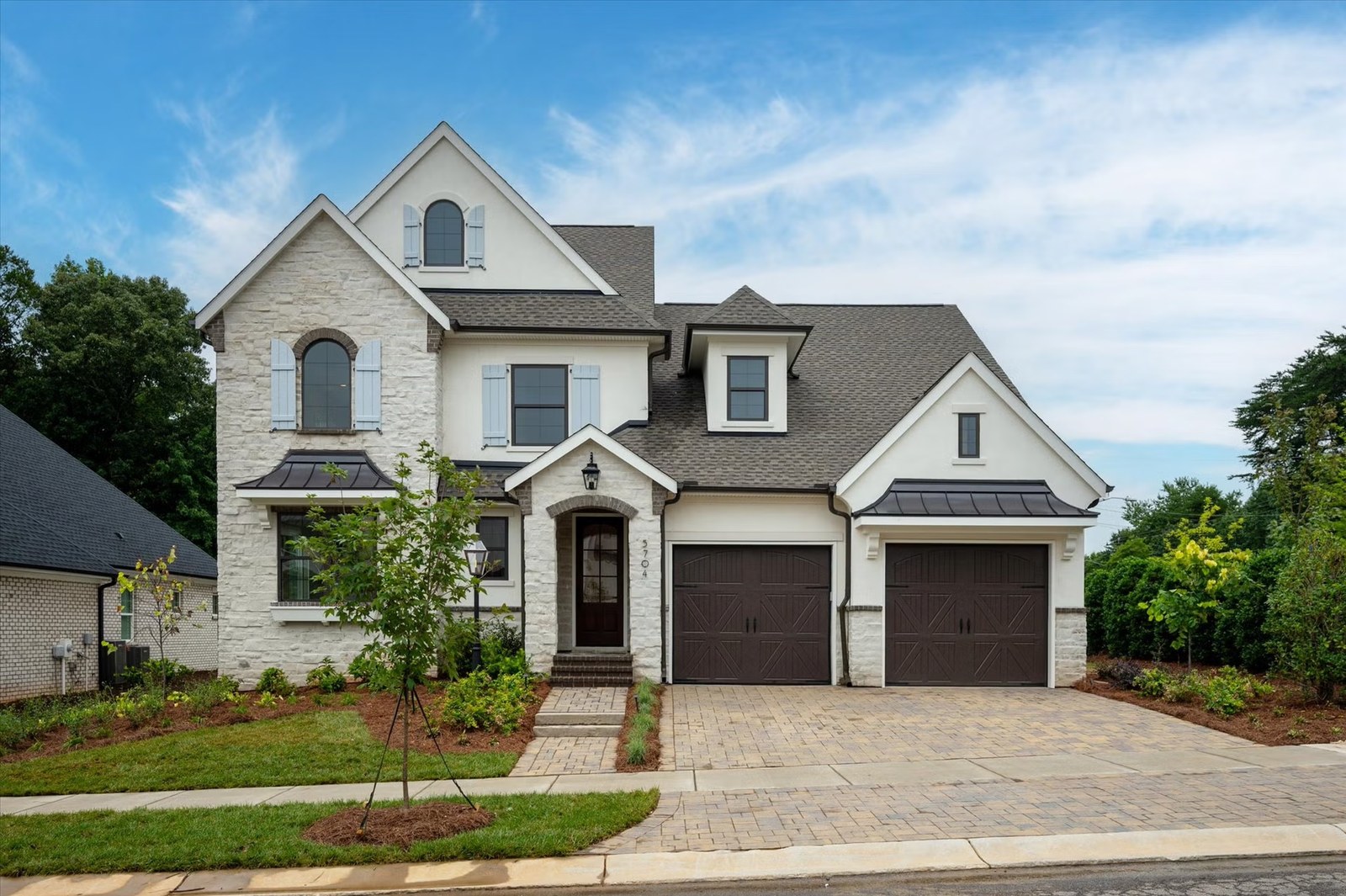
A pale stone-and-siding Carolina home with dark shutters
The short answer

Can you buy a house in Charlotte, NC before selling your current one? Yes — but only when two things are true at once. Buying before you sell works when two things are true at once: the overlap is funded — through a HELOC opened before listing, a bridge loan, or a buy-before-you-sell program, structured with a licensed NC lender — and the overlap is pressure-tested, meaning your budget survives the old home taking months to sell, not weeks. In exchange you get one move, no interim housing, and an old home that sells vacant and staged, which usually shows better. The path's real dangers aren't financial mechanics; they're paying too much for the new home because you're emotionally committed, and building the plan on an optimistic sale price. Both are preventable, and both are prevented before you offer, not after.

What are you really deciding when you buy before you sell?

Every buy-first conversation eventually lands on the same sentence, usually said quietly: can we carry two at once?

Here's the honest answer: for equity-strong Charlotte households, usually yes — the mechanics exist, they're routine, and they're covered below. But that's the smaller question. The bigger one, the one that actually decides whether this path ends well, is: can you carry two for longer than you're planning to? Because the buy-first plan that only works if the old house sells in three weeks isn't a plan. It's a weather forecast.

This post is the deep dive on one of the three paths I map in the cornerstone guide, Selling and Buying at the Same Time in Charlotte: The 3 Paths. If you haven't decided whether you're a Sell First, Buy First, or Bridge household yet, start there. If you already know the double move is the thing you're not willing to do — or the right house has already appeared and hesitation will lose it — keep reading. This path is legitimate. It just refuses to be improvised.

Who should buy before they sell?

  1. Households where a double move is genuinely painful — not merely annoying. A home office that can't go dark for a month. Young kids. A household member whose health makes two upheavals unreasonable. A relocation date that's fixed. When the true cost of moving twice — the interim lease, the storage, the weeks of disruption on both ends — is added up honestly, paying to avoid it is often the rational trade, not the indulgent one.
  2. **The household that has found the house.** Not a house — the one, in a pocket where inventory like it appears twice a year. If you'd genuinely grieve losing it, buy-first exists for exactly this. (If you're not sure the move itself is right yet, that's a different question — answer it first.)
  3. Incomes that can qualify carrying both. This is arithmetic, not aspiration: your lender will count the current mortgage, the new mortgage, and any financing tool's payment against your income — generally without credit for the old home's projected sale. If the numbers clear with room to breathe, the door is open. If they only clear in the optimistic scenario, you've learned which path you're actually on — and selling first is the strong version of that answer, not the consolation prize.
  4. Sellers who want the old home to show at its best. Selling after you've moved means selling a vacant home you can stage, photograph, and show without living inside the process. More on why that's a genuine advantage below.

Who it fits less well: anyone whose plan requires the old home to sell fast and full-price or else. That "or else" is the whole risk of this path, and it doesn't negotiate.

How do you finance owning two homes at once?

The money side has matured. There are three main structures — I'll sketch them here, because the path decision needs the shape of each; the full mechanics, costs, and failure modes get their own deep dive in the Bridge guide.

  1. The HELOC opened before you list. A line of credit against your current home, opened while you're still living in it with no sign in the yard, drawn for the next home's down payment, repaid from sale proceeds. Typically the cheapest structure — with one ambush: lenders generally won't originate a HELOC on a home that's actively listed. The order of operations is the strategy. If your home isn't on the market yet, this door is still open.
  2. The bridge loan. Short-term financing against your current home's equity, designed to be repaid the day the old home closes. Costs more than a HELOC, works later in the process, and comes with a maturity date that doesn't care whether your house has sold. Available in NC mostly through local banks, credit unions, and portfolio lenders.
  3. Buy-before-you-sell programs. Several national programs operating in the Charlotte market will advance or guarantee your current home's equity so you can write a non-contingent offer on the new home, then sell the old one after you've moved. The most convenient structure and priced accordingly — you're buying certainty at retail.

One mechanism worth knowing regardless of structure: recasting. Many lenders will let you apply your sale proceeds to the new mortgage as a lump sum afterward and re-amortize the payment down, usually for a small fee. It's how "carry a big payment briefly" becomes temporary by design instead of permanent by accident.

And the sentence that belongs in bold in every version of this post: these are structures, not advice — sit with a licensed NC lender who handles move-up overlaps and have them model your actual numbers before you fall for anything. Which tool fits depends on your equity, income, and timeline in combination, and the right lender will tell you if the honest answer is "none of them."

How long could you carry both homes?

This is the discipline that separates buy-first households who look back fondly from the ones who don't. Before the first offer, run the ugly scenario on paper:

  1. Model months, not weeks. Take your full overlapping cost — both housing payments, the financing tool, insurance, utilities on two homes — and multiply by a sale timeline two to three times longer than the pretty one. If that number is survivable-but-annoying, proceed. If it's corrosive — sleep, marriage, judgment — this path will cost you more than money.
  2. Qualify on your income alone. No projected proceeds, no "it'll definitely sell by then." If the plan needs the optimistic scenario to pencil, it isn't a plan yet.
  3. Price the old home as a seller, not an owner. The single most common buy-first wound is self-inflicted: an optimistic number on the old house, set by someone who needed it to be true. Get the honest range before you commit to the purchase — and treat the bottom of that range as your planning number. (What a portal estimate says your home is worth and what it clears on an actual date are different figures — that gap is the whole story.)
  4. Decide your floor in advance. If the old home hasn't sold in X weeks, what happens — price cut of how much? Rent it? Knowing the answer before you're carrying two payments is the difference between executing a contingency plan and improvising one under pressure.

A tall Charlotte living room with staircase and windows
An empty, staged house shows better — that is the quiet advantage here.

Does an empty house sell better?

Here's the part of buy-first that doesn't get enough airtime. Once you've moved, the old home stops being your house and becomes your product — and products show better than lives do.

  1. Vacant means preparable. The prep work that actually moves the number — paint, floors, the small repairs you've stopped seeing — happens faster and better in an empty house.
  2. Staged beats lived-in. A professionally staged vacant home photographs cleanly and shows without apology. No morning scrambles before showings, no life on the counters, no scheduling around dinner.
  3. Showings without friction. Any agent, any hour, no notice needed. In practice that means more showings in the first two weeks — the window when the listing is newest and the attention is highest.

The honest counterweight: every week the staged house sits, the overlap meter runs. Vacant-and-staged is an advantage inside a disciplined timeline, not a license to test the market at a fantasy price. The pricing decision is its own strategy — where you set it changes everything downstream — and on this path it deserves more rigor, not less, because you're paying carrying costs while you learn whether you got it right.

What are the risks of buying before you sell?

Risk one: you overpay for the new home because you're emotionally committed. This is buy-first's signature failure, and it's psychological, not financial. You've found the house, you've arranged the financing, you've pictured the furniture — and now a bidding situation asks how much more you'll stretch. The discipline: set your maximum before the offer, in writing, on a calm evening — anchored to what the house is worth, not what losing it would feel like. Then let your agent hold you to it. The buyer who walks from a wrong number finds another house; the buyer who chases one carries the overage for thirty years. This is precisely the moment paying for an advisor who will say "stop" earns its keep.

Risk two: the old home underperforms — slower or lower than planned. You can't eliminate this one; you can only pre-absorb it. That's what the pressure test above is for: a planning number at the honest bottom of the range, reserves modeled in months, and a pre-decided floor. Households that do this experience a slow sale as a frustration. Households that don't experience it as a crisis — and crises make expensive sellers.

Name both risks before you start and this path is a controlled, rational trade: money for certainty and a single move. Skip the naming, and the same path becomes the expensive kind of optimism.

When should you make this decision?

Buying first isn't the impatient path — done properly, it's the most engineered of the three: financing structured before emotion arrives, the overlap stress-tested on paper, the old home sold as a product instead of a compromise. What it asks of you is honesty about numbers before commitment to a house.

If you want to know whether your actual situation points here — or toward selling first or a bridge structure — take the Move Quiz. Two minutes, and it maps your equity, income shape, and risk tolerance to the path that fits. And for the full engineering of a no-double-move transition, the free webinar Sell & Buy Without Moving Twice walks through it end to end. It's free and runs on your schedule — and if you take only one thing from this page, take the pressure test; it works before you ever call anyone.

Before you commit to the overlap, read how to judge an agent for a buy-first move.

Sources

  1. Fannie Mae Selling Guide — monthly debt obligations and departing-residence policy
  2. Consumer Financial Protection Bureau — home loan and equity borrowing guides
  3. Canopy Realtor® Association / Canopy MLS — monthly Charlotte market reports
  4. North Carolina Real Estate Commission — licensee duties and disclosures

Described generally and current as of publication; figures and programs change. Eridania M. Bonilla is a licensed North Carolina broker (NC 359549) with Better Homes and Gardens Real Estate Paracle; each office is independently owned and operated. Equal Housing Opportunity. Not lending, tax or legal advice.

Sixty seconds, no pressure

Which territory are you in?

The Move Quiz maps where you actually are — timeline, budget band, and what you are solving for — in about a minute.

Take the Move Quiz →

Frequently asked

Can I buy a house before selling my current one in Charlotte?

Yes, if your income qualifies to carry both homes and the down payment is funded — typically through a HELOC opened before you list, a bridge loan, or a buy-before-you-sell program. Lenders generally count both payments against your income without credit for the projected sale, so the path fits equity-strong households with room in their debt-to-income. Model the actual numbers with a licensed NC lender before committing.

How do people afford two mortgages when buying before selling?

Usually briefly, and by design: the overlap is funded by one of the three structures above, then collapsed when the old home's proceeds arrive — often via recasting, where the lender applies the lump sum and re-amortizes the new mortgage down. The discipline is budgeting the overlap in months rather than weeks, so a slower sale is a frustration instead of a crisis.

Is it better to sell your house empty or lived-in?

Vacant homes are generally easier to prepare, stage, photograph, and show — no scheduling friction, no daily reset before showings — which tends to serve the critical first weeks of a listing. The trade-off on the buy-first path is that carrying costs run while the staged home sits, so vacant-and-staged works best paired with honest pricing from day one.

What's the biggest risk of buying before selling?

Two, honestly: overpaying for the new home because emotional commitment met a bidding situation — prevented by setting a written maximum before offering — and building the plan on an optimistic sale price for the old home, prevented by planning at the honest bottom of the pricing range with reserves modeled for a slow sale. Both are decided before the offer, not during the scramble.

What happens if my old house does not sell after I buy the new one?

You carry both until it does, which is exactly why the overlap has to be funded and pressure-tested before you buy. Run the number of months you could genuinely carry both payments, then treat that as your ceiling — not your plan.

A dusty-blue study corner with a window and chair
Fund the overlap before you fall for the house.
Eridania M. Bonilla, REALTOR®
Your guide
Eridania M. Bonilla
REALTOR® · Better Homes and Gardens Real Estate Paracle

I help Charlotte families buy, move up, and relocate without losing their footing — treating the whole thing as one calm decision instead of a pressured scramble. Twenty-five years in brand and marketing, the last eight in commercial real estate in New York, taught me that how a place feels is the whole point.

Atención completa en español — escríbeme con confianza.

The quiet letter

One thoughtful note a month

Neighborhood reads, market truth, and the occasional exhale. No noise — unsubscribe anytime.