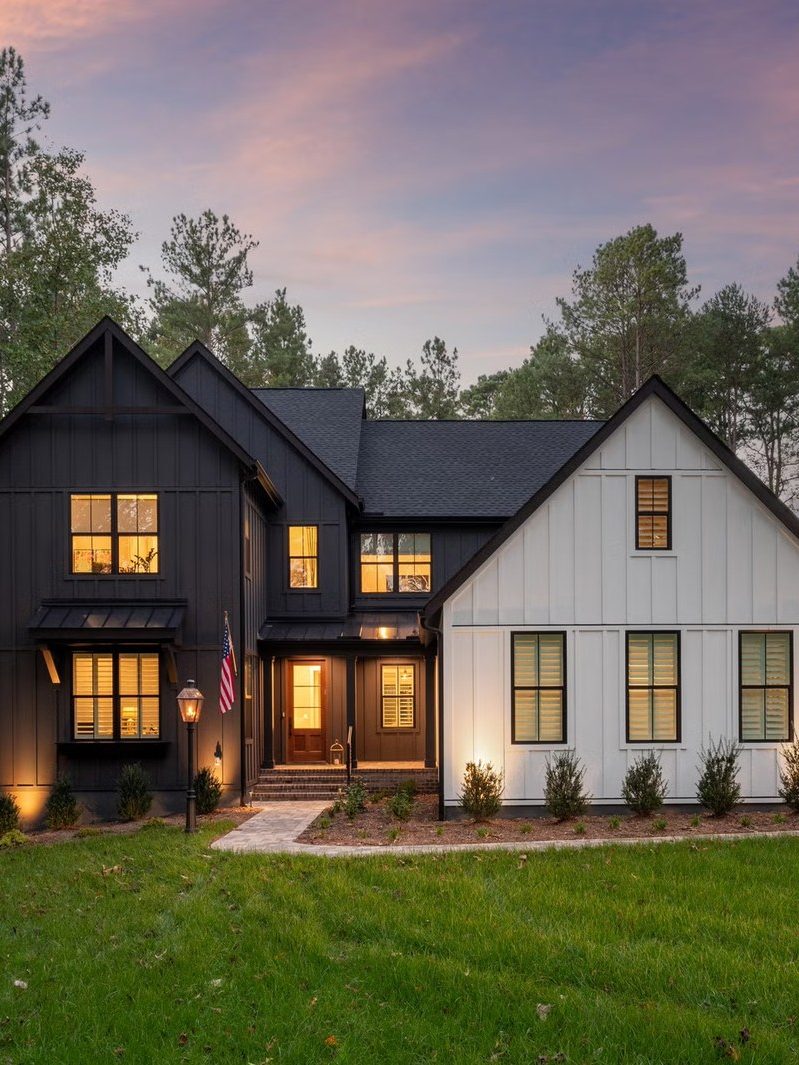
A black and white farmhouse at twilight with lit windows and a pink sky over the pines
Haus of Sanctuary  ·  Sell there, buy here  ·  Moving from New York
New York to North Carolina · the city, Long Island, Westchester

Moving to Charlotte from New York: the taxes, the order of selling and buying, and where to look.

New York State's top rates run from 9.65% to 10.9%, and the city adds up to 3.876%; North Carolina is a flat 3.99% with no local income tax. A New York City seller pays 0.4% to the state and 1.425% to the city on the way out; a North Carolina seller pays 0.2%. Then the practical part: closing in Mecklenburg without a day in Charlotte.

By Eridania M. Bonilla · updated 12 October 2026
Charlotte, NC · illustrative, not a listing
The short answer

Moving from New York to Charlotte changes three tax lines. New York State taxes income in brackets that reach 9.65% above $1,077,550 (joint $2,155,350), 10.30% above $5M and 10.90% above $25M, and New York City residents add up to 3.876%; North Carolina is a flat 3.99% for 2026 with no county or city income tax. On the sale, New York State's transfer tax is $2 per $500, 0.4%, paid by the seller, and the city's Real Property Transfer Tax adds 1.425% on a residence over $500,000 (1% at or below), also the seller's; the 1% mansion tax at $1 million and above is the buyer's. North Carolina's excise is $1 per $500, 0.2%, paid by the seller, with no Mecklenburg transfer tax.

Typical sales: $900k in New York City and $838k in Nassau over the three months to September 2026; $1,205,000 in Westchester and $760,000 in Suffolk for single-family homes in August; $468,000 in Mecklenburg County in August. Run every line with your accountant.

Income: NYS Department of Taxation and Finance, FY2027 tax expenditure report and 2025 IT-201 instructions; N.C.G.S. 105-153.7, tax year 2026. Transfer: NYS DTF; NYC Department of Finance; N.C.G.S. 105-228.30. Prices: Redfin, 3 months to Sep 2026; OneKey MLS, Aug 2026; Canopy MLS, Aug 2026. Sources at the foot of the page.

The numbers

The tax difference, in numbers.

Three lines, both sides, every figure dated. The New York property-tax row is written as the city's Class 1 rate because that is what the Department of Finance publishes; Nassau, Suffolk and Westchester bills are set town by town and school district by school district, and no official median was on a readable page, so none is stated.

Typical sale · Mecklenburg County · August 2026
$468,000

Canopy MLS median for Mecklenburg County, up 1.8% on a year earlier. The New York rows mix Redfin all-home medians with OneKey single-family medians; scale, not a spread.

New York City · Redfin, 3 months to Sep 2026$900k
Nassau County · Redfin, same window$838k
Westchester · OneKey, single-family, Aug 2026$1,205,000
Suffolk · OneKey, single-family, Aug 2026$760,000
Mecklenburg County · Canopy MLS, Aug 2026$468,000
Three tax lines · New York against Charlotte
  • State and city income tax
    New York9.65% to 10.9% top rates + NYC up to 3.876%

    state brackets from $1,077,550 (joint $2,155,350), $5M and $25M, through 2032 · NYC resident rate 3.876% above $90,000 joint (2025 schedule) · 2026 lower brackets reduced

    North Carolina · Charlotte3.99% flat

    tax year 2026 · no county or city income tax

  • Property tax, one home
    New YorkNYC Class 1: 19.843% of assessed value

    tax year 2026, one- to three-family homes (20.085% in 2025) · Nassau, Suffolk and Westchester: set by town, school district and village; read the current bill · not stated

    North Carolina · Charlotte$5,751 in Charlotte · $3,519 in Weddington

    on a $750,000 assessment · FY2025-26 · 76.68¢ and 46.92¢ per $100

  • Tax on selling, seller's side
    New York0.4% + 1.425% in the city

    NYS $2 per $500, the grantor pays · NYC RPTT 1.425% on a residence over $500,000 (1% at or below), the seller pays · $16,425 on a $900k city sale · outside the city, the 0.4% only: $3,352 on $838k in Nassau · the 1% mansion tax at $1M+ is the buyer's

    North Carolina · Charlotte0.2%

    $1 per $500, paid by the transferor · $936 on $468,000 · no Mecklenburg transfer tax

Charlotte's bill is county + city rate only; fees are extra. The Class 1 rate applies to a taxable assessed value, not the sale price; read it off your own statement. Run it with your accountant.

NYS Department of Taxation and Finance, FY2027 personal income tax rates and 2026 withholding changes; 2025 IT-201 instructions, New York City tax rate schedule · NYC Department of Finance, property tax rates and Real Property Transfer Tax · NYS DTF, real estate transfer tax · N.C.G.S. 105-153.7 and 105-228.30 · Mecklenburg County FY2025-26 rate chart · Redfin and OneKey MLS as dated · Canopy MLS, Mecklenburg County, August 2026.

Sell there, buy here

Sell in New York, buy in Charlotte: the order.

There are three orders, and the right one depends on how much of the New York equity the Charlotte purchase needs and how long you can carry two homes. A co-op adds a board-approval calendar on the New York side that none of the three orders can shorten; put it on the timeline first.

Order one

Sell first

Close in New York, then buy here with the proceeds in hand. The cleanest offer in Charlotte and one closing to attend there, with a gap to bridge: a short lease, a post-closing possession agreement with your New York buyer, or a longer settlement date written into the North Carolina contract. The sell-first guide.

Order two

Buy first

Secure the Charlotte house before listing in New York. It works when the down payment does not depend on the New York sale, or when a lender will qualify you on both payments. Two mortgages for a season; no second move. Buy first, then sell.

Order three

The bridge

Borrow against the New York equity to buy here, then repay from the sale. The cost is the bridge interest and fees for the weeks in between; the benefit is a non-contingent offer in a market where the Mecklenburg median is $468,000. The bridge, explained.

Closing in North Carolina from New York

North Carolina closings are attorney closings: the State Bar's Authorized Practice Advisory Opinion 2002-1 says a non-lawyer may not handle a residential closing for any party, so a North Carolina attorney examines the title, prepares the deed, records and disburses. You do not have to be in the room. Three routes are common, and the attorney, the lender and the title insurer choose between them: the package sent to you to sign before a notary where you are and courier back; a limited power of attorney for this one closing, signed and acknowledged (G.S. 32C-1-105) and registered with the register of deeds before the deed (G.S. 47-28); or a remote electronic notarization under Chapter 10B, where the lender and insurer accept it. Settle the route before the contract is signed.

The calendar is set in the contract. North Carolina's Offer to Purchase and Contract (Form 2-T) has a negotiated due-diligence period, during which the buyer can walk for any reason and pays the seller a due-diligence fee for the right, then a settlement date the parties choose. New York is also an attorney state, so the shape is familiar; the difference is that the Carolina contract puts the buyer's decision in one dated window and prices it with a due-diligence fee, rather than running on a signed contract after inspection. Set the Charlotte settlement date against the New York closing, with underwriting time and a courier day inside it.

NC State Bar APAO 2002-1 · N.C.G.S. 32C-1-105, 47-28 and 10B-134.1 · N.C.G.S. 105-228.30. New York-side closing custom is not sourced here; your New York attorney has it. An older page on this site, moving to Charlotte from NYC, covers what to expect on arrival.

Eridania M. Bonilla
Your guide
Eridania M. Bonilla

REALTOR® with Better Homes and Gardens Real Estate Paracle. I work with people moving to Charlotte and within it, in English and in Spanish, and I would rather you see the tax bill and the closing calendar before the kitchen. More about Eri.

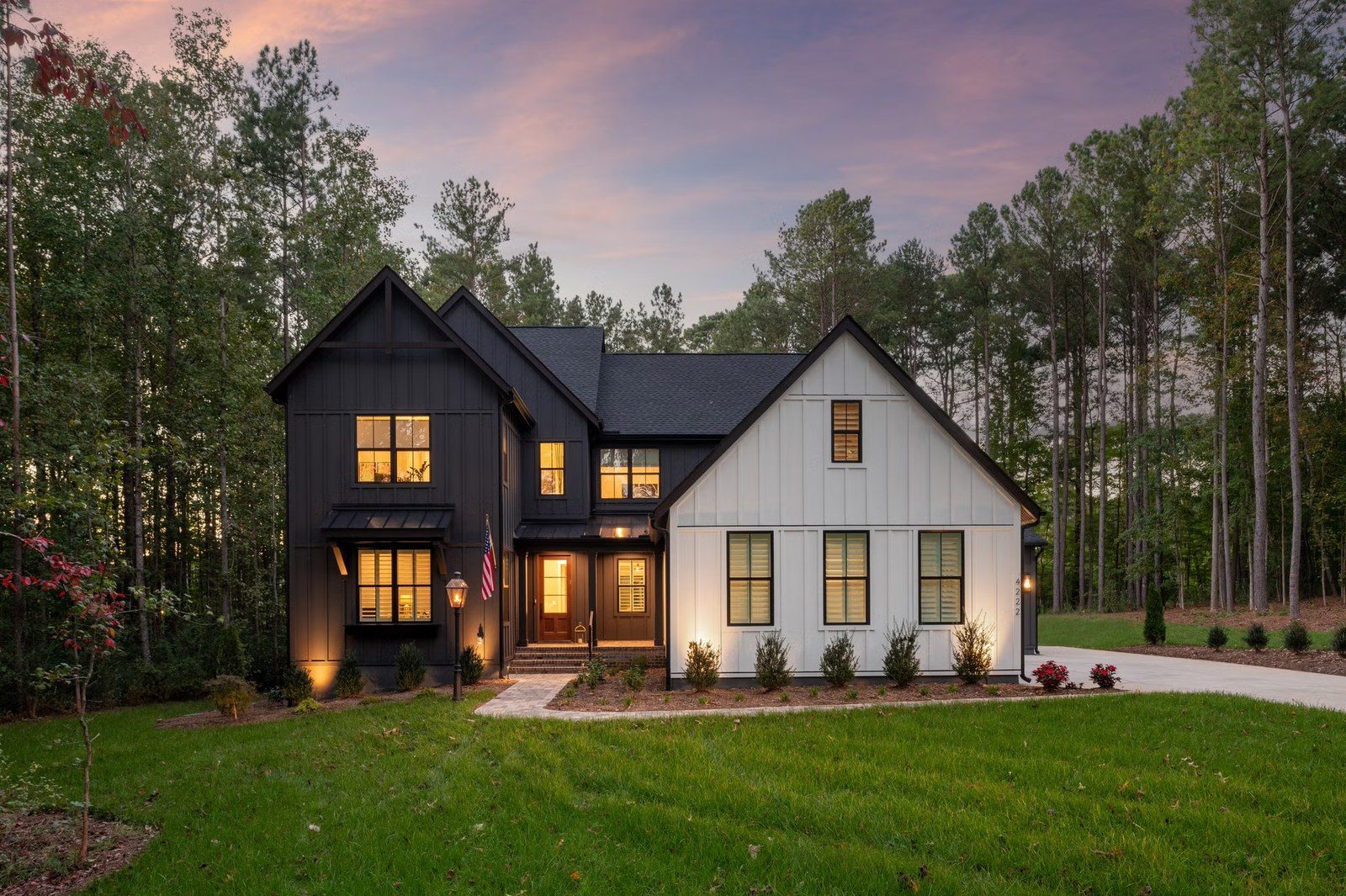
A black and white farmhouse at twilight with lit windows, illustrative of the region's newer construction
Illustrative · not a specific listing
Where to look

Where people moving from New York tend to look.

The questions that arrive from New York are about the drive to the airport and to Uptown, whether there is an in-town option with old houses, what land costs, and whether the lake is a real lake. The six areas below answer them with numbers; the hub puts them side by side.

  • BallantyneSouth Charlotte inside the city line: $644k typical on about 950 sales a year, 26 minutes to Uptown and to the airport free-flow, a 4.4-million-square-foot office campus. City rate 76.68¢. Living in Ballantyne.
  • Waxhaw, Marvin & WeddingtonUnion County, south of the I-485 ring: $731k typical on about 1,000 sales, the lowest combined rates of the six (46.92¢ in Weddington), larger lots, 28 to 39 minutes to Uptown. Living in Waxhaw, Marvin & Weddington.
  • Mooresville & Lake NormanA 32,000-acre lake, the largest man-made body of water in the state: $644k typical in 28117, about $1.30M on the shoreline itself, 39 minutes to Uptown. Living in Mooresville & Lake Norman.
  • Myers Park & EastoverThe in-town answer: a 1911-plan historic district on the National Register, $1.25M typical on about 180 sales, 8 minutes to Uptown. Living in Myers Park & Eastover.
  • Huntersville, Cornelius & DavidsonNorth Mecklenburg on I-77 and its express lanes: $576k to $653k typical, town rates 66.58¢ to 75.87¢, public lake access at Blythe Landing and Ramsey Creek. Living in Huntersville, Cornelius & Davidson.
  • Matthews & Mint HillEast and southeast, the shortest suburban drives: 19 and 22 minutes to Uptown free-flow, $506k to $553k typical. Living in Matthews & Mint Hill.

Six areas side by side, with the map: where to live in Charlotte. Assigned schools change by address; each area page links the district's lookup. This page states no opinion on any school.

Sixty seconds, no pressure

Which part of Charlotte fits you?

Budget, drive, land, new or old, the lake. Five questions, one of six areas, the numbers attached.

Which part of Charlotte fits you? → Selling in New York and buying here? Watch the 19-minute class
Free class · 19 minutes

Sell & Buy Without Moving Twice.

The three orders above with the financing behind each: how a sell-first, buy-first or bridge move is paid for, what the North Carolina contract asks of a buyer, and the questions to put to a lender before you list in New York. Recorded, so you can watch it tonight.

Watch the class →
19 minutes · recorded · in English; en español
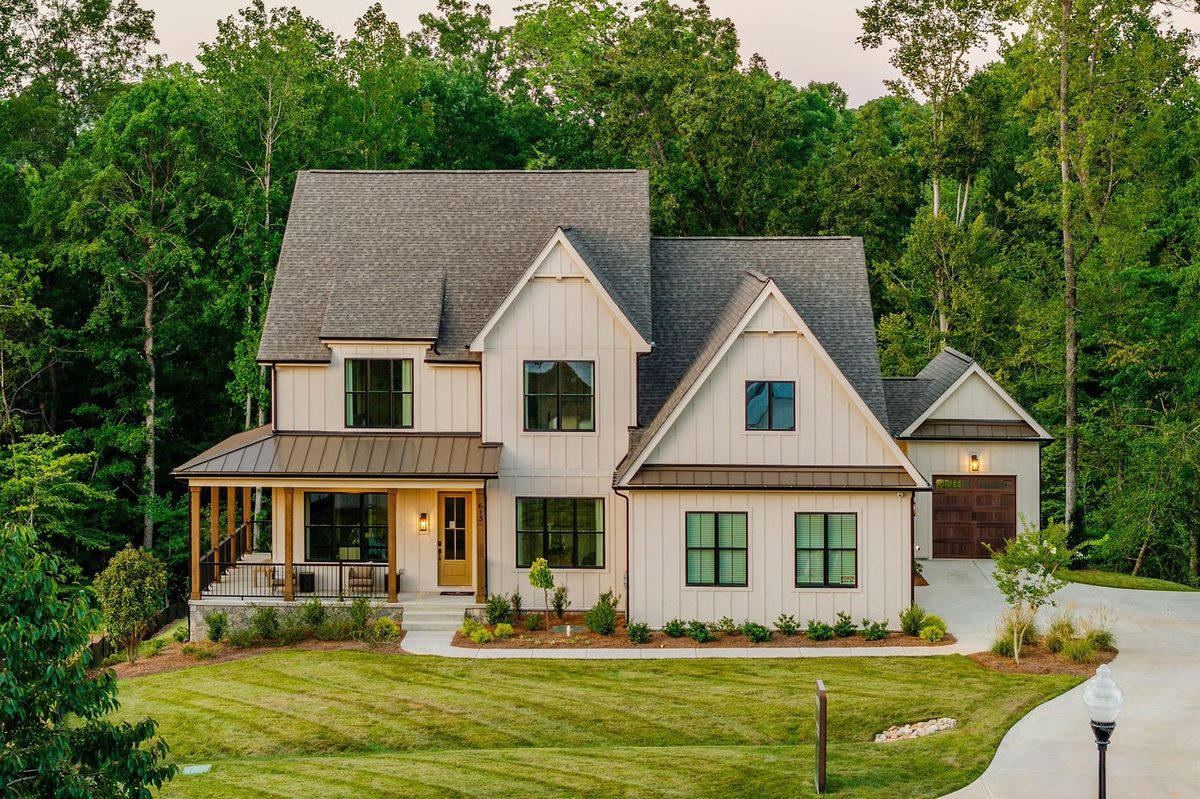
A cream farmhouse with a deep porch on a wooded lot
Illustrative · not a specific listing
Frequently asked

The questions people type.

Is it cheaper to live in Charlotte than New York?

On the three tax lines here, yes, by the widest margin of any origin on this site. Income tax is a flat 3.99% with no local tax, against state brackets reaching 9.65% to 10.9% and a city tax of up to 3.876%. Selling costs 0.2% here against 0.4% to the state plus 1.425% to the city on a city sale over $500,000. Property tax here is a rate on the assessment, 76.68¢ per $100 in Charlotte; the city's Class 1 rate is 19.843% of a taxable assessed value. Line items: the cost of living in Charlotte. Run it with your accountant.

How much is the transfer tax when selling in New York compared with North Carolina?

The state's $2 per $500 (0.4%) is the seller's; in the city the Real Property Transfer Tax adds 1% at or below $500,000 and 1.425% above, also the seller's: $16,425 on the $900k typical city sale. The 1% mansion tax at $1 million and above is the buyer's. Outside the city the seller pays the 0.4% only: $3,352 on $838k in Nassau. North Carolina's excise is $1 per $500, 0.2%, the transferor's: $936 on $468,000, no Mecklenburg transfer tax.

Do I have to be in North Carolina to close on a house?

No. North Carolina is an attorney-closing state, and the attorney can take your signatures three ways: a package sent to you to sign before a notary where you are and courier back; a limited power of attorney for this one closing, signed, acknowledged and registered with the register of deeds before the deed; or a remote electronic notarization where the lender and title insurer accept it. Agree the route before the contract is signed.

Should I sell my New York home before buying in Charlotte?

Sell first if the Charlotte down payment comes out of the New York equity and you can take a short gap; buy first if it does not, or a lender will carry both payments; bridge if you want a non-contingent offer and can pay for the weeks in between. A co-op adds board approval to the calendar in every order. The three guides and the 19-minute class go through the financing of each.

Where do people moving from New York to Charlotte look for homes?

The six areas where most of the $500k–$1.5M market trades, the in-town one first: Myers Park and Eastover ($1.25M typical, pre-war, 8 minutes to Uptown), Ballantyne ($644k typical, 26 minutes to Uptown and the airport), Waxhaw, Marvin and Weddington in Union County ($731k, the lowest combined tax rates), Mooresville and Lake Norman ($644k, a 32,000-acre lake), Huntersville, Cornelius and Davidson ($576k–$653k on I-77) and Matthews and Mint Hill ($506k–$553k, 19–22 minutes to Uptown). Each has its own page with the tax rate and the drive.

Sources

Every number on this page, and where it came from.

  1. NYS Department of Taxation and Finance, personal income tax (FY2027 tax expenditure report): "9.65 percent on income between $1,077,550 and $5 million ($2,155,350 and $5 million for joint filers), 10.30 percent on income between $5 million and $25 million (all filers), and 10.90 percent on income over $25 million"; for tax years 2033 and after the top rate reverts to 8.82 percent. 2026 withholding changes: the 2026 state rate schedules were revised for enacted reductions in the lower brackets. Read 12 Oct 2026.
  2. NYS DTF, 2025 Form IT-201 instructions, New York City tax rate schedule: 3.078% to 3.876%, the top rate above $90,000 for joint filers and $50,000 for single filers (tax year 2025; the 2026 city schedule was not on a readable page). Read 12 Oct 2026.
  3. NYC Department of Finance, property tax rates: "Property tax rates for tax year 2026: Class 1 - 19.843%"; 2025: 20.085%. Nassau, Suffolk and Westchester median bills were not found on an official readable page and are not stated. Read 12 Oct 2026.
  4. NYS DTF, real estate transfer tax: "computed at a rate of two dollars for each $500"; "An additional tax (mansion tax) of 1% of the sale price applies to residences where consideration is $1 million or more"; "The base tax … [is] paid by the grantor (seller)"; "The additional tax (mansion tax) and supplemental tax are paid by the buyer." Read 12 Oct 2026.
  5. NYC Department of Finance, Real Property Transfer Tax: residential: "If the value is $500,000 or less, the rate is 1% of the price. If the value is more than $500,000 the rate is 1.425%." Read 12 Oct 2026.
  6. Redfin, New York City and Nassau County housing markets: three months ending September 2026: New York median $900K (+1.6%); Nassau County $838K (+2.8%). Read 12 Oct 2026.
  7. OneKey MLS, market statistics, August 2026: single-family closed median: Westchester $1,205,000 (+9.5%), Suffolk $760,000 (+7.0%), Nassau $911,000 (+4.7%). Read 12 Oct 2026.
  8. N.C.G.S. 105-153.7, individual income tax rates: 3.99% for taxable years after 2025; a revenue trigger can lower it from 2027. No North Carolina county or city levies an income tax. Read 12 Oct 2026.
  9. N.C.G.S. 105-228.30, excise tax on conveyances: "$1.00 on each $500.00 or fractional part thereof"; "The transferor must pay the tax to the register of deeds." Read 12 Oct 2026.
  10. Mecklenburg County, FY2025-26 Jurisdiction Tax Rate Chart: county 49.27¢ + Charlotte 27.41¢ = 76.68¢ per $100. Weddington 46.92¢ is Union County 43.42¢ + town 3.5¢ (Union County FY2026 budget; Town of Weddington FY2026 budget). Next Mecklenburg revaluation 2027. Read 12 Oct 2026.
  11. Canopy Realtor® Association, Local Market Update, August 2026: Mecklenburg County median sales price $468,000, up 1.8% year over year; current as of 5 September 2026. Read 12 Oct 2026.
  12. North Carolina State Bar, Authorized Practice Advisory Opinion 2002-1: "May a nonlawyer handle a residential real estate closing for one or more of the parties to the transaction? Opinion: No." Read 12 Oct 2026.
  13. N.C.G.S. 47-28, powers of attorney affecting real property: the power of attorney, or a certified copy, is registered with the register of deeds before a transfer executed by an agent; a non-resident principal may register it where the property lies. N.C.G.S. 32C-1-105: a power of attorney must be signed by the principal and acknowledged. Read 12 Oct 2026.
  14. N.C.G.S. Chapter 10B, Article 2, remote electronic notarization: definitions of communication technology and the remotely located principal; the NC Secretary of State administers it. Whether a lender or title insurer accepts it on a given file is not stated anywhere official; ask the closing attorney. Read 12 Oct 2026.
  15. Redfin Data Center, ZIP and city trackers, residential sales Jun 2025–May 2026: the typical-sale figures for the six Charlotte areas, as compiled for where to live in Charlotte; drive times are OSRM free-flow routing, 12 Oct 2026, an off-peak floor. Read 12 Oct 2026.

Tax figures are for the years stated and change on each budget, revaluation and legislative session; property-tax bills here are rate × assessed value ÷ 100 at the county + municipal rate only, with fire-district, solid-waste and vehicle fees extra. Where a figure is marked "reported", it was not read on an official page and is stated as approximate for that reason. Facts on this page describe homes, taxes, roads and institutions, never the people of any place. Not tax, legal or lending advice; run every line with your accountant. Equal Housing Opportunity.

The right part of Charlotte is the one where your ordinary Tuesday gets better.
Which part of Charlotte fits you? →